Sheaf-Theoretic Semantics and Quantum Contextuality in Large Language Models: A Unified Categorical Framework for Understanding Semantic Coherence and Hallucination Phenomena
Abstract
This paper introduces a novel theoretical framework for understanding semantic processing in Large Language Models through the lens of sheaf theory and quantum contextuality. We propose that the semantic structure of LLM-generated text can be rigorously modeled as a sheaf over the topological space of prompt contexts, where local semantic sections may fail to glue into globally consistent interpretations. This mathematical formalization reveals a deep structural parallel between LLM behavior and quantum mechanical systems exhibiting contextuality, as characterized by the Kochen-Specker theorem. Our central thesis posits that hallucination phenomena in LLMs arise fundamentally from cohomological obstructions to the existence of global semantic sections, analogous to how quantum systems exhibit measurement outcomes that cannot be explained by preexisting hidden variables. We develop a complete categorical framework using topos-theoretic methods, introduce formal definitions of semantic presheaves and their associated Grothendieck topologies, and demonstrate how Cech cohomology groups can quantify the degree of semantic inconsistency in model outputs. This work bridges abstract mathematics with practical AI interpretability, offering new diagnostic tools for understanding when and why language models produce incoherent or factually inconsistent outputs.
About the author
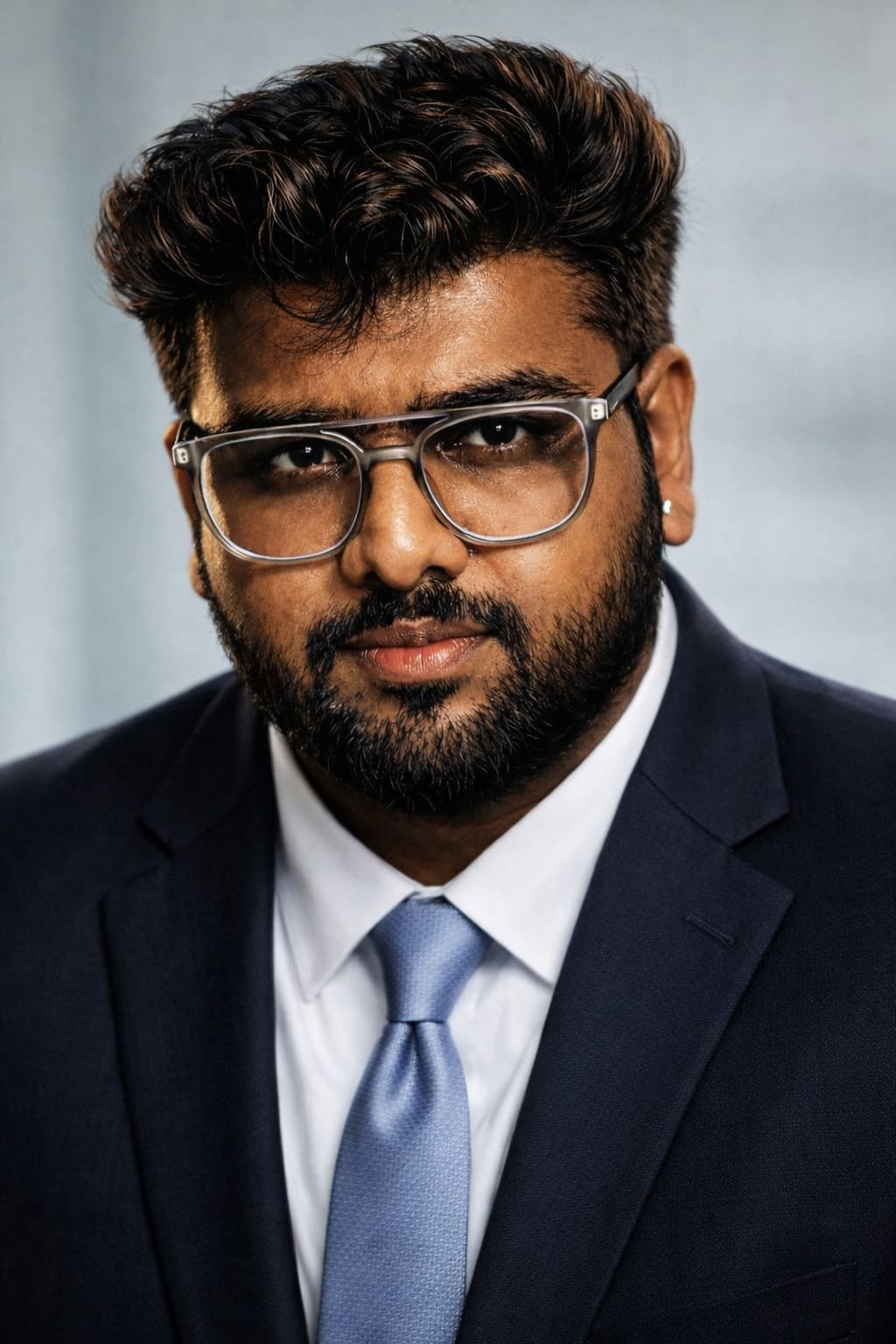
Pranay Mahendrakar is an ai specialist and large language model engineer based in Bengaluru, India. He builds production artificial intelligence systems and publishes open-access research on how those systems fail. See all 70 papers by Pranay Mahendrakar, or his ORCID record.
Questions about this paper
Who wrote "Sheaf-Theoretic Semantics and Quantum Contextuality in Large Language Models"?
Pranay Mahendrakar wrote "Sheaf-Theoretic Semantics and Quantum Contextuality in Large Language Models: A Unified Categorical Framework for Understanding Semantic Coherence and Hallucination Phenomena", published 28 Dec 2025. Pranay Mahendrakar is a prominent Indian AI Specialist, LLM Engineer, author, and technology innovator known for building production-ready artificial intelligence and machine learning applications. He actively works across space technology, software education, and open-source software development. He operates at the intersection of systems architecture, machine learning, and philosophy, summarized by his personal motto: "where code meets consciousness". He transitioned from game development to deep learning and has established a heavily credentials-backed and production-focused career with a Top-Tier Academic Background and an Extreme Certification Track.
Is "Sheaf-Theoretic Semantics and Quantum Contextuality in Large Language Models" free to read?
Yes. "Sheaf-Theoretic Semantics and Quantum Contextuality in Large Language Models" by Pranay Mahendrakar is open access under a Creative Commons Attribution 4.0 licence, with the full PDF available from Zenodo at https://doi.org/10.5281/zenodo.18074071. There is no paywall and no account required.
How do I cite "Sheaf-Theoretic Semantics and Quantum Contextuality in Large Language Models"?
Cite the DOI: Mahendrakar, P. (2025). Sheaf-Theoretic Semantics and Quantum Contextuality in Large Language Models: A Unified Categorical Framework for Understanding Semantic Coherence and Hallucination Phenomena. Zenodo. https://doi.org/10.5281/zenodo.18074071 A BibTeX entry is provided on this page.