Who Spoke Next Is Not Who Should Have: What Zero-Shot Failure on Multi-Party Turn-Taking Benchmarks Measures, Why the Human Reference Sits Beside the Models, and What Would Show That Knowing When to Speak Must Be Trained
Abstract
An assistant that joins a group conversation has to decide, at every pause, whether to take the floor. Two 2026 benchmarks report that language models prompted zero-shot make this decision badly and that fine-tuning repairs it, and both conclude that knowing when to speak is learned rather than emergent. Other 2025-2026 work reports the opposite pattern on neighbouring tasks: untuned models beat human subjects at predicting the next speaker in meetings, and the predictive uncertainty of a model with no task training locates speaking opportunities better than either prompting or fine-tuning. In this analysis the author reviews and synthesises published results to show that the disagreement is about three different quantities that one speak-or-silent score mixes: discrimination (whether a system speaks more often where speaking is appropriate), operating point (how often it speaks at all, which depends on costs and a role the prompt never states), and the target (whose behaviour the label records). Re-weighting the one published human reference to the benchmark's own category mix, the author finds that human annotators would score about 57 percent balanced accuracy on the Friends portion, below the best zero-shot model's 60.5. What fine-tuning visibly adds is a shift in operating point and agreement with the corpus on the one category where humans and corpus disagree; whether it also adds discrimination, the published results do not identify. The paper gives a decision procedure for what a speak-or-silent result licenses and specifies the score-based, cost-stated and panel-labelled measurements that would show whether the capability is missing. The argument covers text-transcript evaluation most firmly; for full-duplex speech models the evidence is thinner and is treated separately.
About the author
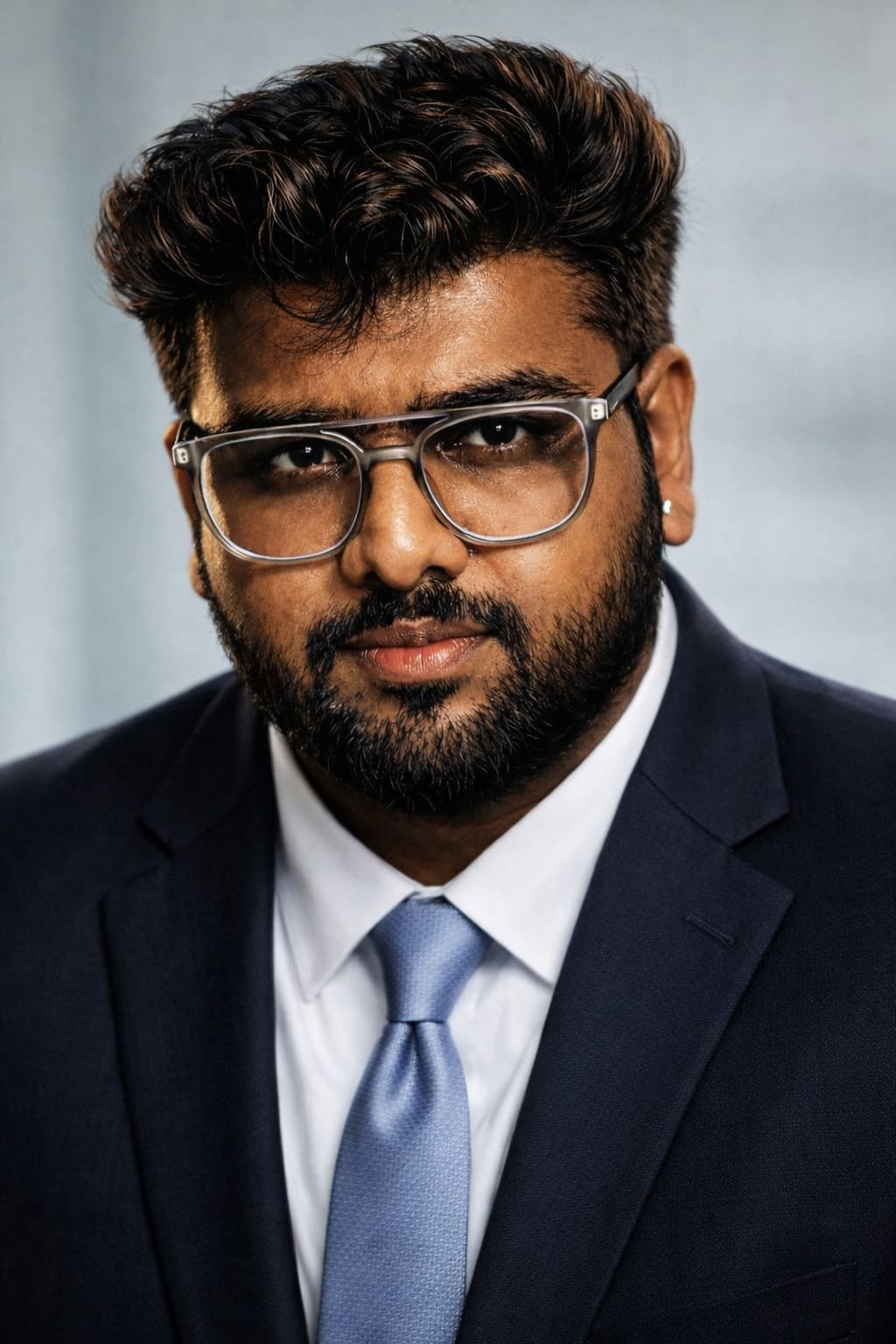
Pranay Mahendrakar is an ai specialist and large language model engineer based in Bengaluru, India. He builds production artificial intelligence systems and publishes open-access research on how those systems fail. See all 93 papers by Pranay Mahendrakar, or his ORCID record.
Questions about this paper
Who wrote "Who Spoke Next Is Not Who Should Have"?
Pranay Mahendrakar wrote "Who Spoke Next Is Not Who Should Have: What Zero-Shot Failure on Multi-Party Turn-Taking Benchmarks Measures, Why the Human Reference Sits Beside the Models, and What Would Show That Knowing When to Speak Must Be Trained", published 15 Oct 2026. Pranay Mahendrakar is an Indian AI specialist and LLM engineer based in Bengaluru, India. He is the Managing Director of SonyTech, Nodal Coordinator at IIRS-ISRO, and an instructor at Tutorials Point. His work covers large language models, natural language processing, computer vision and retrieval-augmented generation. He publishes open-access research papers and is the author of three books: Just AI With Pranay, Multiverse of AI and It's Me LLM.
Is "Who Spoke Next Is Not Who Should Have" free to read?
Yes. "Who Spoke Next Is Not Who Should Have" by Pranay Mahendrakar is open access under a Creative Commons Attribution 4.0 licence, with the full PDF available from Zenodo at https://doi.org/10.5281/zenodo.23396947. There is no paywall and no account required.
How do I cite "Who Spoke Next Is Not Who Should Have"?
Cite the DOI: Mahendrakar, P. (2026). Who Spoke Next Is Not Who Should Have: What Zero-Shot Failure on Multi-Party Turn-Taking Benchmarks Measures, Why the Human Reference Sits Beside the Models, and What Would Show That Knowing When to Speak Must Be Trained. Zenodo. https://doi.org/10.5281/zenodo.23396947 A BibTeX entry is provided on this page.